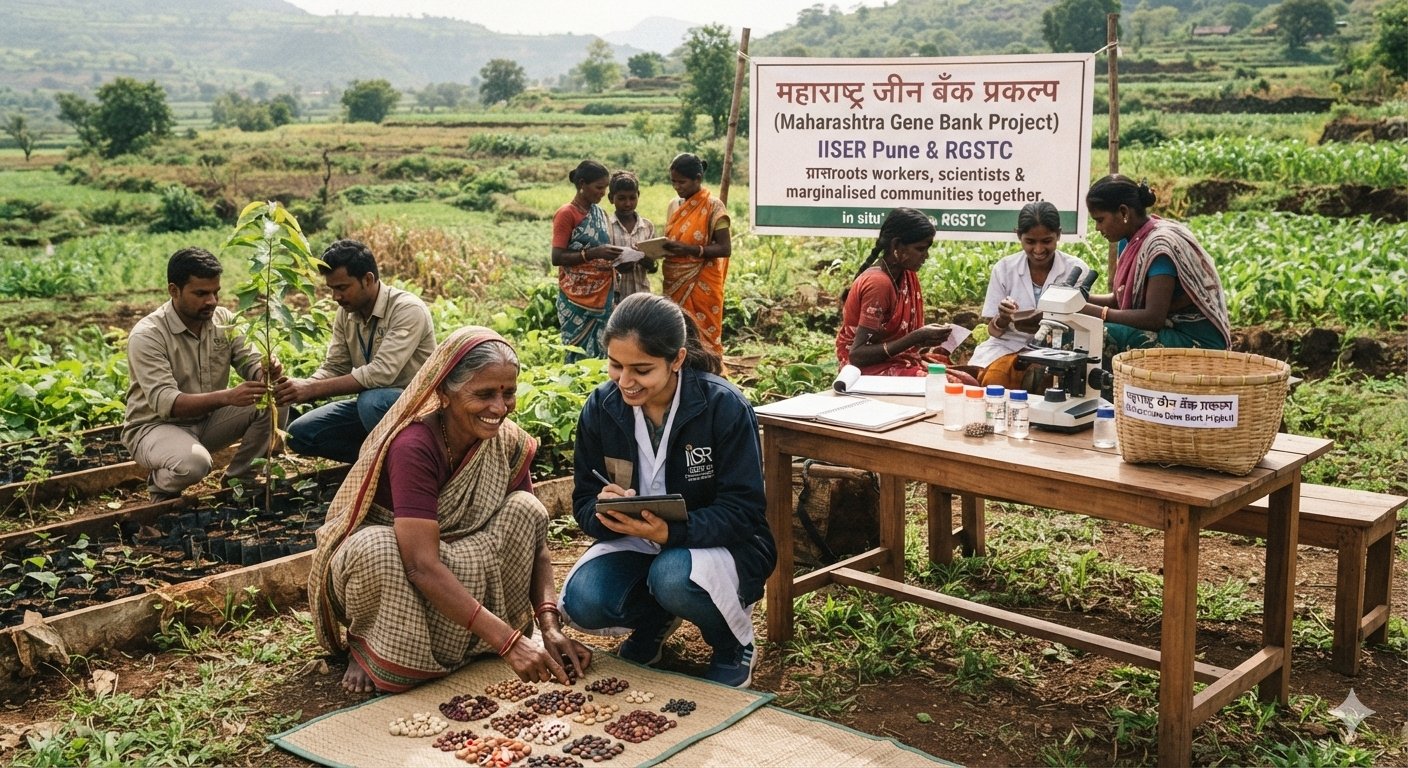
In 2006, the Rajiv Gandhi Science and Technology Commission (RGSTC), Government of Maharashtra, invited renowned ecologist Prof. Madhav Gadgil to design a pioneering gene bank programme for Maharashtra. Following 122 extensive multi-stakeholder consultations held across 24 districts, the programme was conceived not as a conventional, static ex-situ seed vault duplicating national collections, but as a living gene bank that safeguards genetic resources in their dynamic, evolving habitats alongside community custodians.
Sanctioned in January 2014 and coordinated centrally by the Indian Institute of Science Education and Research (IISER) Pune, the programme operated through December 2020 across 29 of Maharashtra's 35 districts. It brought together grassroots workers, scientific researchers, and local tribal and pastoral communities to validate traditional indigenous wisdom against modern scientific methodologies.
The Maharashtra Gene Bank Programme spans seven interconnected thematic areas: Marine Biodiversity, Crop Genetic Diversity, Livestock Genetic Diversity, Freshwater Fisheries, Grassland Ecosystems, Forest Eco-restoration, and Information, Education & Communication (IEC).
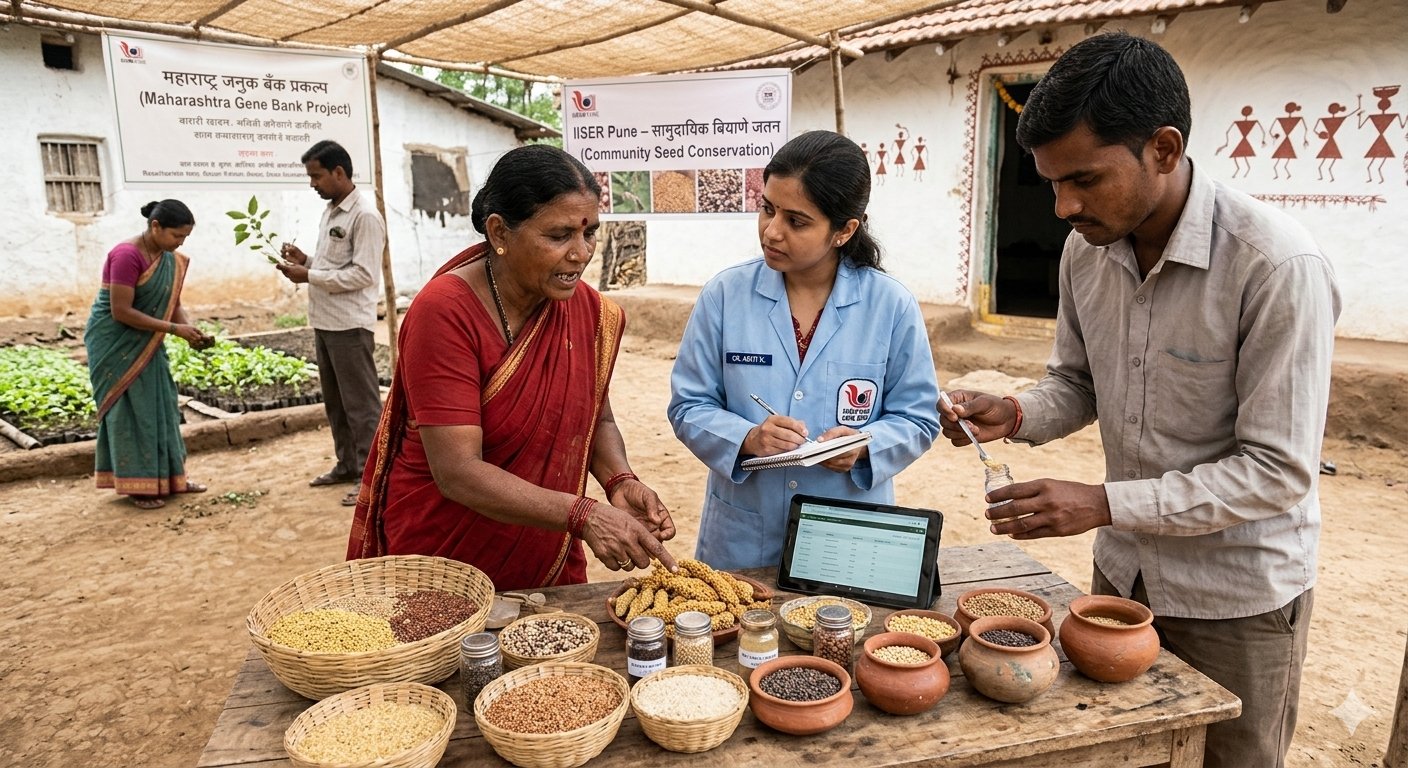
Preserving indigenous landraces, traditional livestock breeds, and sacred grove ecosystems within active farmer fields, community forests, and local pastures under continuous customary selection.
Combining participatory documentation with taxonomic rigor, DNA barcoding, cryopreservation of livestock semen, and open-access Darwin Core bio-informatics platforms coordinated by IISER Pune.
Fostering community seed saver networks, breeder associations, and Gram Sabha forest management to translate grassroots ecological knowledge into state conservation policy frameworks.
The programme was steered through a high-level Scrutiny Committee constituted by RGSTC, featuring eminent scientists, institutional directors, and community leaders. Operational execution was led by IISER Pune as nodal coordinator, collaborating with 3 National R&D Institutes, 2 Universities, and 15 grassroots NGOs across Maharashtra.