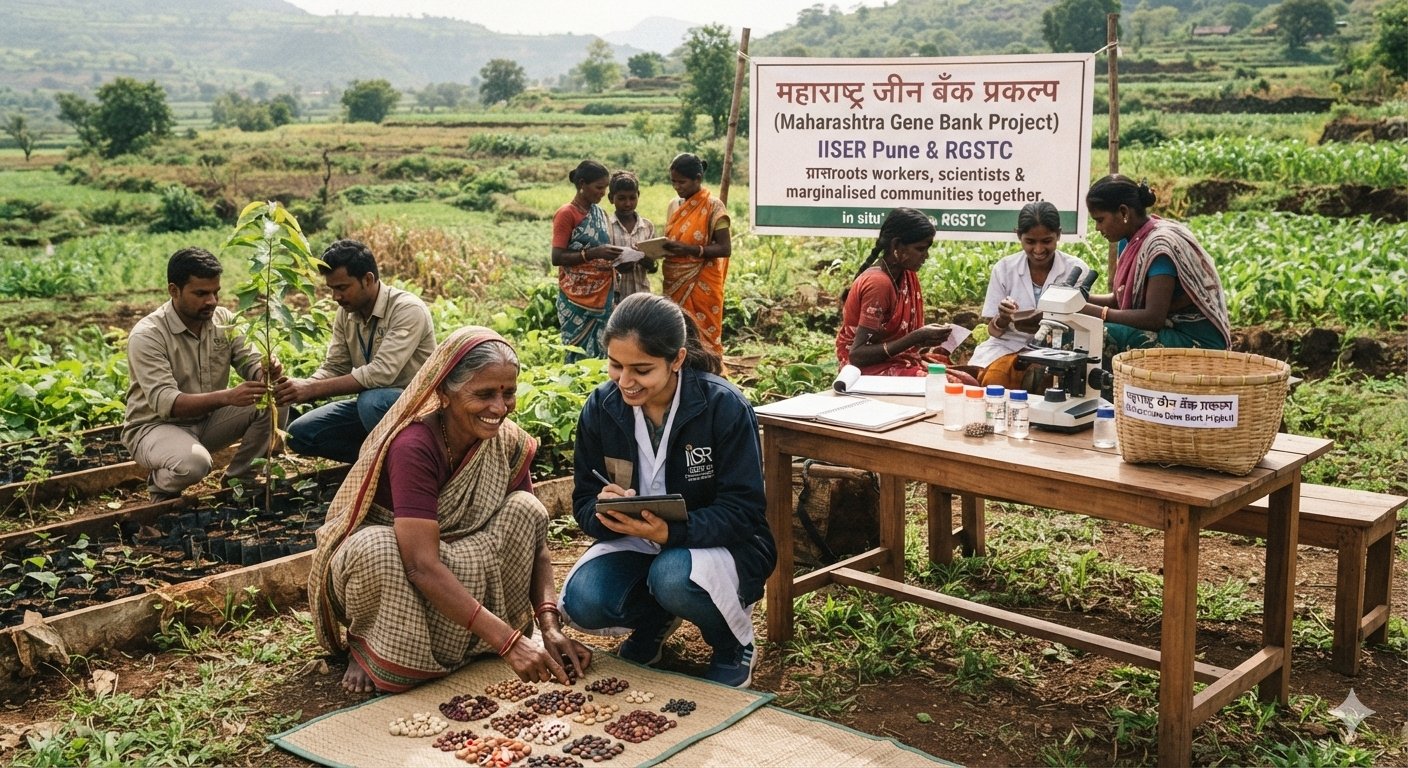
Community-Led Conservation Across Maharashtra
The core philosophy of the Maharashtra Gene Bank Programme is that long-term biological conservation cannot succeed without the leadership, traditional ecological wisdom, and economic empowerment of primary resource-dependent communities.
Rather than relying exclusively on ex situ scientific laboratories or restrictive protected areas, the programme mobilized thousands of indigenous farmers, pastoralists, fisherfolk, and tribal forest-dwellers across the state as recognized custodians of genetic wealth.

Village Seed Saver Groups Conserving Landraces
Biodiversity Management Committees (BMCs) Activated
Gram Sabhas in Gadchiroli with Forest Rights
Fisher societies Managing Reserved Biodiversity Tanks
Core Dimensions of Community Participation
Seed Saver Groups & Biyane Jatra
Over 179 autonomous seed saver groups were established across tribal belts (Akole, Jawhar, Dhadgaon, Gadchiroli). Operating decentralised community seed banks, women farmers exchange pure landrace seeds annually without commercial debt.
996 Landraces ConservedPastoralist Breeders Association
In Ahmednagar's high-rainfall Sahyadri ranges, Dangi cattle keepers formed the Dangi Breeders Association, taking direct ownership of pedigree registration, elite bull exchanges, and preventing cross-breeding dilution.
30 Core Research FamiliesCommunity Wetland Stewardship
Traditional Dhimar and Bhoi inland fishing societies in Gondia and Bhandara voluntarily designated historical Malguzari tanks as closed biodiversity nurseries, ensuring native fish stock regeneration during spawning seasons.
208.9 ha Water ReservedGram Sabha CFR Governance
Over 1,100 tribal Gram Sabhas in Gadchiroli exercised statutory Community Forest Rights (CFR) under FRA 2006, independently regulating non-timber forest produce harvesting, protecting sacred groves, and creating local employment.
2,000 ha Forest RestoredApproved Case Studies & Outcomes
Verified grassroots case studies demonstrating traditional ecological knowledge, community leadership, and documented biological outcomes.
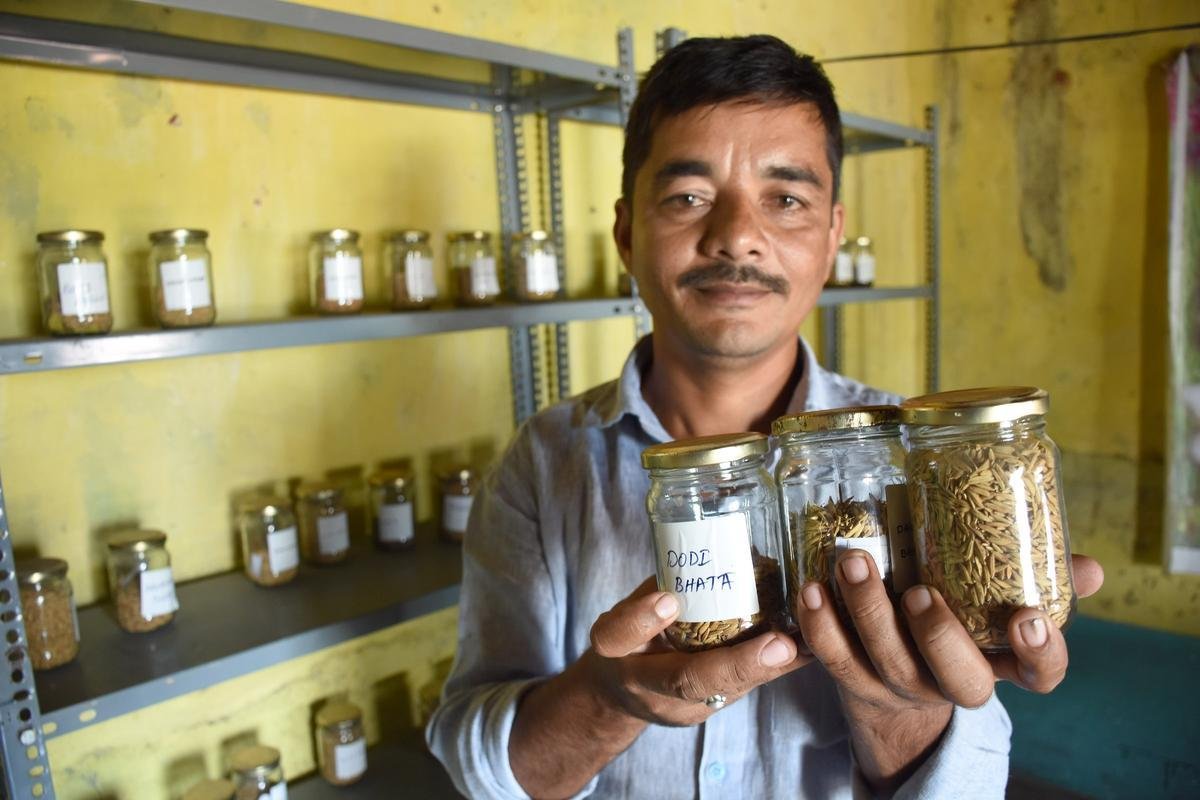
Women-Led Seed Sovereign Networks in Akole & Nandurbar
Traditional Practice: Ancestral subterranean earthen seed storage (Kangi) treating heritage paddy and finger millet with neem leaves and cow dung ash.
Community Initiative: Formed 179 village seed saver groups, operating seed lending libraries and organizing the annual Biyane Jatra seed exchange festival.
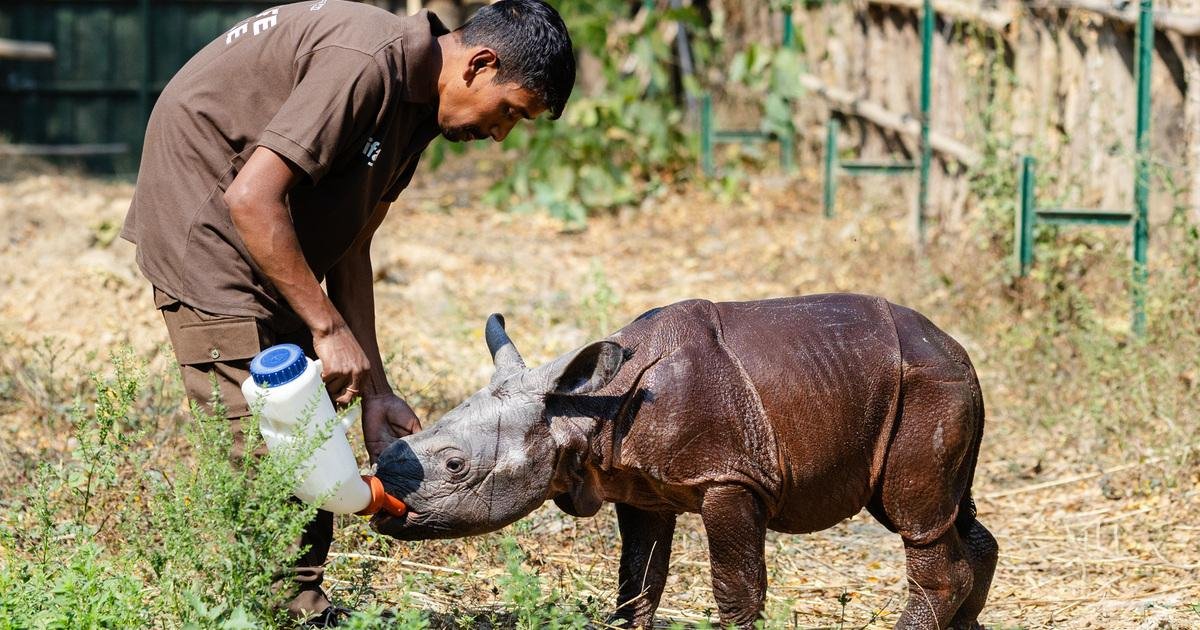
Dangi Breeders Association in the High Sahyadris
Traditional Practice: Seasonal transhumant herding through heavy monsoon Ghats, selecting cattle with oily skin and hardy hooves resistant to rot.
Community Initiative: Tribal pastoralists established Maharashtra's first community-run Dangi Breeders Association to manage stud bulls and maintain herd books.
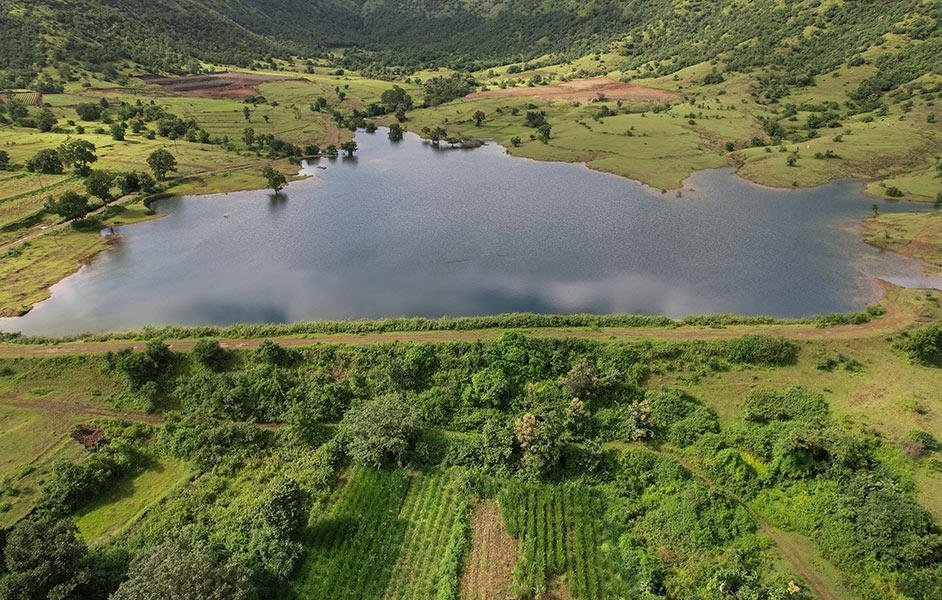
Dhimar Wetland Sanctuaries in Historical Malguzari Tanks
Traditional Practice: Customary seasonal fishing bans during monsoon fish breeding runs and selective bamboo basket traps (Bavane).
Community Initiative: Fisher cooperatives in Gondia and Bhandara voluntarily designated 12 Malguzari tanks as closed biodiversity nurseries.
Prior Informed Consent & Traditional Knowledge Protection
In strict accordance with the Biological Diversity Act, 2002 and international Nagoya Protocol guidelines, all community knowledge, oral histories, and photographs presented in this documentation have been obtained with Prior Informed Consent (PIC). Personal identities, sacred ancestral locations, and tribal customary recipes remain protected from unauthorized commercial appropriation.